
A late-night disclosure triage should sort every listing image by what changed, preserve the original, and keep uncertain files out of the upload queue until reviewed. The safest workflow connects each virtually staged image to a visible disclosure and a provenance record before the photo travels to the MLS, portals, social posts, or video.
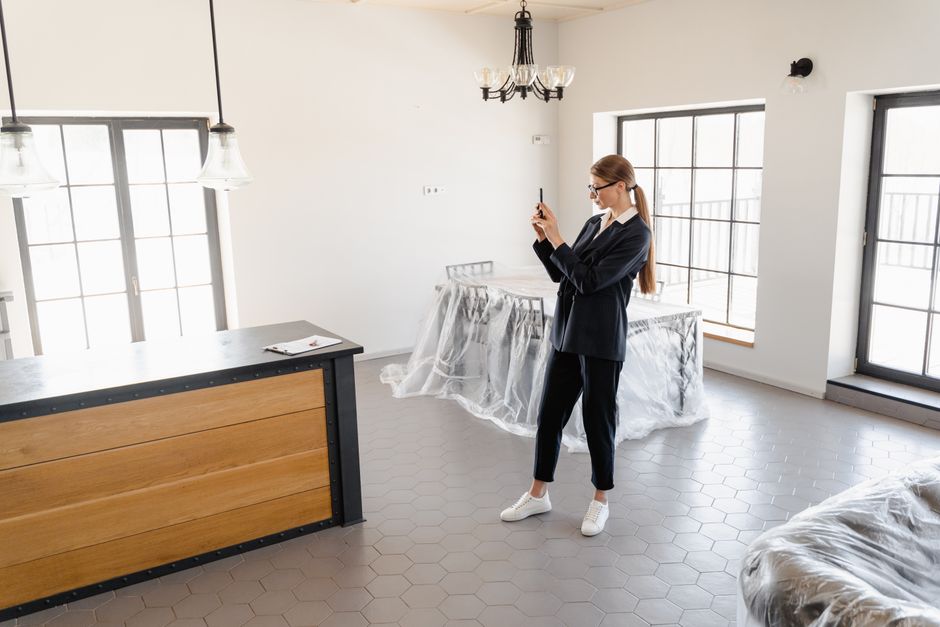
At 9:12 PM on Thursday, Elena, a composite of a self-funded listing agent in Sacramento, is staring at 34 newly delivered photos beside a cooling mug of coffee. The upload is due Friday. Twelve images clearly contain digital furniture, fifteen appear conventionally edited, and seven sit in a gray area: a fire in the fireplace, greener grass, a brightened view through the windows, and one suspiciously perfect kitchen counter.
If she classifies an altered image incorrectly, an undisclosed version could reach the public listing. If she holds the entire set, the Friday launch could slip. For the next few minutes, either outcome remains possible.
Sort by what the image communicates
Elena creates three working groups: virtually staged, conventionally edited, and uncertain.
The virtually staged group is the easiest. Empty rooms now contain beds, sofas, rugs, lamps, and artwork. These images need disclosure treatment under the applicable rules and guidance. In California, AB 723 makes the disclosure question especially concrete for digitally altered real estate images.
The conventionally edited group includes exposure correction, color balancing, straightening, and cropping that do not appear to add or remove property features. Elena still keeps the originals. An edit can look routine while changing what a buyer reasonably believes exists at the property.
The uncertain group receives no benefit of the doubt. A flame added to an empty fireplace may communicate that the fireplace operates. Greener grass may hide a current condition. A cleaned counter is less consequential than a removed appliance, yet both deserve comparison with the source photo.
The useful question is not “Does this look polished?” It is “What could a buyer infer from this image that the original does not support?”
Give uncertain images a holding lane
At 9:26 PM, Elena reaches the kitchen image. The original shows a compact countertop appliance near an outlet. The delivered version does not. She cannot tell whether the photographer removed it digitally or captured a second frame after someone moved it.
That distinction matters for the record, even if the final image presents the same physical kitchen. Guessing would turn an uncertain file into an undocumented decision.
Elena moves it into a holding folder and sends one precise question to the photographer: “Was this object physically moved before another exposure, or removed during editing?” She does the same for the fireplace and lawn. Those images stay outside the MLS upload set until she gets an answer or chooses the unchanged originals.
This holding lane protects the deadline because it separates unresolved files from ready ones. Elena can continue preparing the confirmed images, MLS remarks, and tour sequence instead of repeatedly reopening the entire folder.
The source files remain beside every derivative. That pairing can matter later if a buyer, seller, broker, or regulator asks what changed. [The original listing photo an agent keeps](\/blog\/the-original-listing-photo-the-agent-kept-and-the-dispute-it-could-prevent-1f2a8fb5\/) may become the clearest evidence available.
Keep disclosure attached to the image
A disclosure stored only in MLS remarks can disappear when an image moves elsewhere. Portals may display photos apart from the full description. Social posts, email flyers, and listing videos create additional separation.
Elena’s confirmed virtually staged images therefore receive a burned-in, state-specific AI disclosure. Each also connects to a public provenance page showing the source relationship. NestPath Listing Studio generates that disclosure-assisted package from the agent’s own listing photos, along with a narrated Remotion tour video and an MLS-ready text pack with a fair-housing check.
The software helps create a consistent record. Elena still reviews the result against current state requirements, MLS rules, broker policy, and association guidance. Disclosure language does not excuse a materially misleading alteration, and software does not replace the agent’s legal judgment.
For a deeper look at distribution risk, see [the disclosure that may vanish when a virtually staged listing photo travels](\/blog\/the-disclosure-that-may-vanish-when-a-virtually-staged-listing-photo-travels-bc6b2c04\/).
Close the loop before Friday’s upload
At 10:03 PM, the photographer confirms that the countertop appliance was physically moved before a second exposure. The fireplace flame and lawn color were added during editing.
Elena returns the kitchen photo to the conventionally edited group with the photographer’s note attached. She rejects the altered lawn image in favor of the original. The fireplace image goes through the disclosure workflow and receives a final review before joining the upload set.
By 10:21 PM, the Friday folder contains only approved files. Each virtually staged image carries its disclosure. Each derivative has a retained source. The unresolved folder is empty, and Elena is no longer relying on memory to explain which pixels changed.
That is the practical standard for late-night triage: classify, isolate uncertainty, verify the change, preserve the source, and review disclosure before distribution.
Comments
No comments yet.